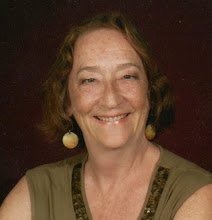
In Boston this winter we've had huge, amazing quantities of snow. Lots of people are continuously complaining about it. I myself, though sometimes inconvenienced, have been enjoying it. I loved the first blast, observed from inside my cozy home. The wind was so fierce, it drove the snow sideways. We had a nice fire going, and drank mulled wine.
Ignoring my car the next day, I let it repose under its white blanket while I made my way in warm boots to the busstop. On the bus I observe the streets with new eyes, and enjoy the many types getting on and off. In subsequent weeks, as the snow descended again and again, I did my grocery shopping in the neighborhood. I made do at times by raiding my own pantry and coming up with inventive recipes. I fed the birds and squirrels who visit my back deck, and bought fresh flowers for my living room.
Now mid-February brings longer days and stronger sunlight. My city is still piled everywhere with snow, dirtier by the day as it slowly melts. There's a touch of spring in the air. Aren't you glad you don't live in boring Florida?
Saturday, February 19, 2011

Saturday, January 22, 2011
mini book review: WATER
Water, A Natural History by Alice Outwater
Basic Books 1996 186 pages
This is a story of the relationship between water and land. "Water is the blood of land."
Outwater's tone is at once affectionate and reverent. From prairie dog lifestyle to scientific stats, the book is readable and enlightening.
In many ways, it's a tragic story. The author takes us back to the 17th century fur trade, the beginning of the end for the plentiful beaver. Lost too are the ecological benefits from the beaver's lifestyle, which forms dams, ponds, and wetlands. "A land with hundreds of millions of beavers is a truly rich land, and the wetlands associated with beaver dams made the New World's water plentiful and clear as the dew."
After decimation of the beavers, that of buffalo, prairie dogs, and alligators followed, as did the way in which each species benefitted the land. Forests were cleared; by 1870 over 60% of the original forests were gone. (Those that have grown back are "shadows of what they once were.") So too the vast prairies. "The natural system was being dismantled piece by piece." As a result, "water is no longer able to clean itself naturally, and despite our best legislative efforts our waterways are still impaired."
In the 1930s came the dams, (there are 50,000 dams in this country), altering and simplifying river systems. Then in the 1940s came thousands of new chemicals, pesticides and fertilizers.
Outwater makes a passionate and convincing case for bringing back beavers and prairie dogs to public lands.
This thesis is original enough, but what makes her book really wonderful is the way her mind works. It spans four centuries with ease and constant interconnection, weaving the mesmerizing story much like an ecosystem. She thinks systemically, illuminating for us a whole new take on the disaster that's called progress.
Basic Books 1996 186 pages
This is a story of the relationship between water and land. "Water is the blood of land."
Outwater's tone is at once affectionate and reverent. From prairie dog lifestyle to scientific stats, the book is readable and enlightening.
In many ways, it's a tragic story. The author takes us back to the 17th century fur trade, the beginning of the end for the plentiful beaver. Lost too are the ecological benefits from the beaver's lifestyle, which forms dams, ponds, and wetlands. "A land with hundreds of millions of beavers is a truly rich land, and the wetlands associated with beaver dams made the New World's water plentiful and clear as the dew."
After decimation of the beavers, that of buffalo, prairie dogs, and alligators followed, as did the way in which each species benefitted the land. Forests were cleared; by 1870 over 60% of the original forests were gone. (Those that have grown back are "shadows of what they once were.") So too the vast prairies. "The natural system was being dismantled piece by piece." As a result, "water is no longer able to clean itself naturally, and despite our best legislative efforts our waterways are still impaired."
In the 1930s came the dams, (there are 50,000 dams in this country), altering and simplifying river systems. Then in the 1940s came thousands of new chemicals, pesticides and fertilizers.
Outwater makes a passionate and convincing case for bringing back beavers and prairie dogs to public lands.
This thesis is original enough, but what makes her book really wonderful is the way her mind works. It spans four centuries with ease and constant interconnection, weaving the mesmerizing story much like an ecosystem. She thinks systemically, illuminating for us a whole new take on the disaster that's called progress.
Snow
I love snow.
After November winds have finally stripped the trees, we can admire the intricate elegance of every twig, not to mention the impressive nests of squirrels and birds that have been hidden all summer. Then, just when the uniformity of landscape begins to pall, rain becomes white crystals that blanket and brighten the dark winter world.
Can't dig out your car? Good! Put on your best boots and tramp through the fresh air. Be a child again, wonder at the transformation , the beauty.Take to your heart the natural systems of our precious planet, of which you are a part.
After November winds have finally stripped the trees, we can admire the intricate elegance of every twig, not to mention the impressive nests of squirrels and birds that have been hidden all summer. Then, just when the uniformity of landscape begins to pall, rain becomes white crystals that blanket and brighten the dark winter world.
Can't dig out your car? Good! Put on your best boots and tramp through the fresh air. Be a child again, wonder at the transformation , the beauty.Take to your heart the natural systems of our precious planet, of which you are a part.
Friday, November 5, 2010
Loving autumn
Here is the most beautiful poem I've ever read about this season. (Another sweet one is Keats'--"Season of mists and mellow fruitfulness.")
This gem is by Richard Wilbur.
Asides
Though the season's begun to speak
Its long sentence of darkness,
The upswept boughs of the larch
Bristle with gold for a week,
And then there is only the willow
To make bright interjection,
Its drooping branches decked
With thin leaves, curved and yellow,
Till winter, loosening these
With a first flurry and bluster,
Shall scatter across the snow-crust
Their dropped parentheses.
Isn't it glorious?! The little gold parentheses scattered on the snow...
This gem is by Richard Wilbur.
Asides
Though the season's begun to speak
Its long sentence of darkness,
The upswept boughs of the larch
Bristle with gold for a week,
And then there is only the willow
To make bright interjection,
Its drooping branches decked
With thin leaves, curved and yellow,
Till winter, loosening these
With a first flurry and bluster,
Shall scatter across the snow-crust
Their dropped parentheses.
Isn't it glorious?! The little gold parentheses scattered on the snow...
Sunday, September 12, 2010
mini book review: The End of the Long Summer
by Dianne Dumanoski, Crown Publishers 2009, 252 pp.
I love this book. It's a brilliant gem. Basically, it takes the thoughts and premises of most environmental thinkers into the next realm of understanding. Wholistically, Dumanoski looks at the systemic disruption to Earth's metalbolism, while also examining "how our current modes of thinking fuel this emergency." The question, she says, is no longer simply how we can stop climate change, but how we can as a civilization survive it.
This masterpiece includes cultural critiques both detailed and broad, including the pitfalls of globalization, the role of the human brain, the temptations of technofix, our vulnerability to pandemic, and how to shock-proof our human social system.
A new cultural map is needed, Dumanoski says, because "the routine business of our civilization is threatening its own survival."
She wants us to actually THINK differently. I for one doubt that we can, but every bit of my spare time is spent trying to help it happen. What about you?
Monday, September 6, 2010
New York Times Connects the Dots
Wow. Seeing the front page of the New York Times on August 15 brought a sigh of relief (a yelp! of relief) to us hardworking environmentalists. There it was: three big photos of climate change at work: Pakistan floods, Russian wildfires, and unusually wild storms in Chicago, headlined "In Weather Chaos, a Case for Global Warming."
At last, big time media is getting it!
The 8/15 issue came out the second day of my annual two week vacation in Wellfleet, Cape Cod. The juxtaposition of such beauty all around me, with this cultural acknowledgement of the planet's danger, was a jolt to my heart.
At last, big time media is getting it!
The 8/15 issue came out the second day of my annual two week vacation in Wellfleet, Cape Cod. The juxtaposition of such beauty all around me, with this cultural acknowledgement of the planet's danger, was a jolt to my heart.
Thursday, September 2, 2010
Next reading from my eco-thriller Human Scale
Come to my next reading at Out of the Blue Art Gallery on Sept 10 at 8 p.m. (106 Prospect Street in Cambridge). Human Scale, which came out in May (Plain View Press), is making waves with folks who were wondering what it's going to be like on this planet in 2062.
See you there!
See you there!
Subscribe to:
Posts (Atom)